



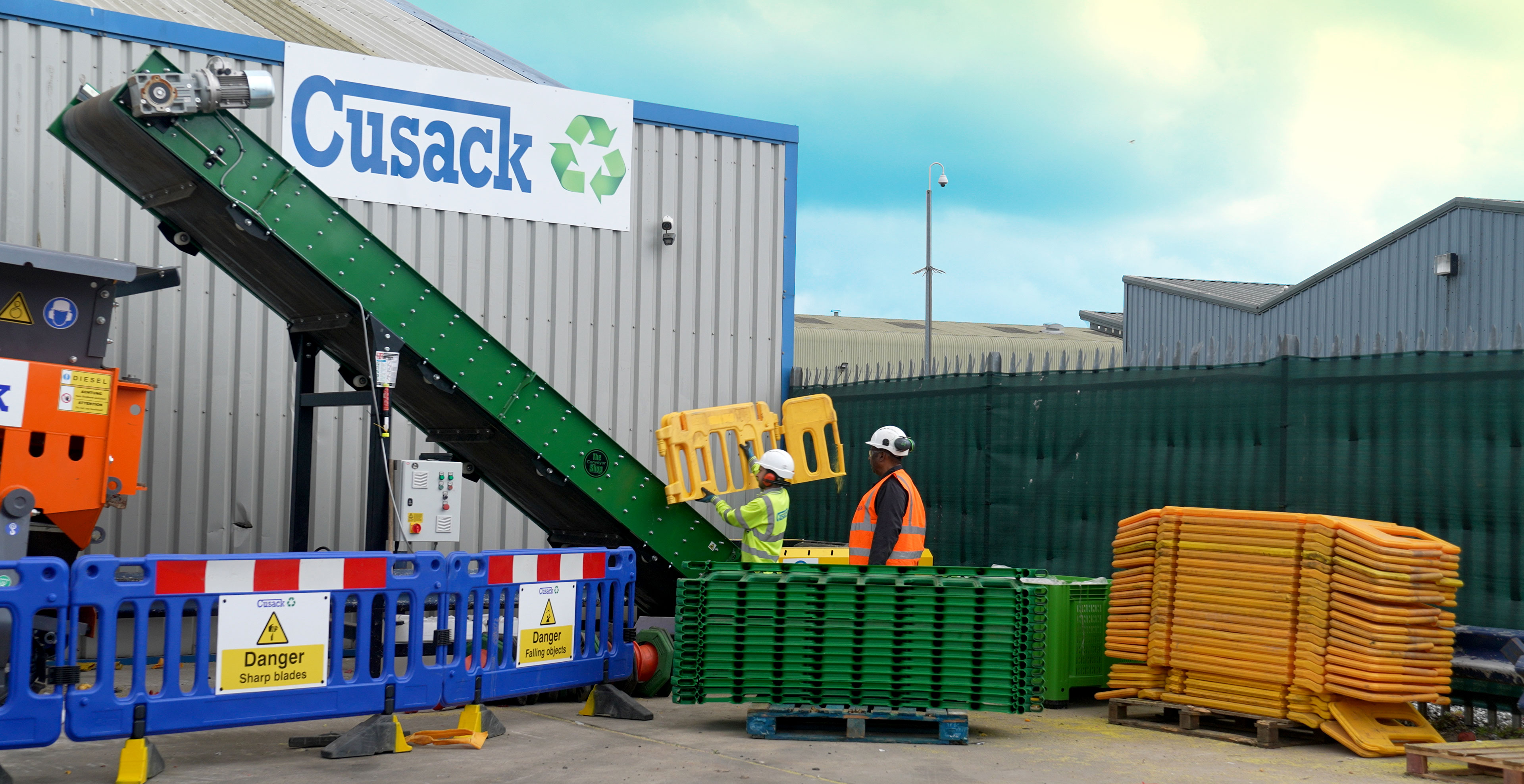
Our Recycling Services
Recycling sits at the core of our sustainability goals. Through our Traffic Management Recycling Facility, we give end-of-life road products a second life by turning them back into safe, usable equipment for the industry. Alongside this, our PPE Recycling Service helps reduce waste by recovering and safely disposing protective gear, while our Battery Recycling Scheme ensures harmful materials are handled responsibly and reused wherever possible. Together, these initiatives cut landfill waste, save resources, and make everyday operations greener.
Traffic Management Recycling Service
Reduce waste ending in landfill and makes disposal easier.
Protect your brand by ensuring responsible waste management.
Create new products from recycled materials.
Helps you meet sustainability goals and supports stronger resource management in the UK.
Be part of an award-winning scheme.
Winner of the Streetworks Sustainable Methods 2023 Award.
Provides certification, ideal for inclusion in ESG programs and statements.
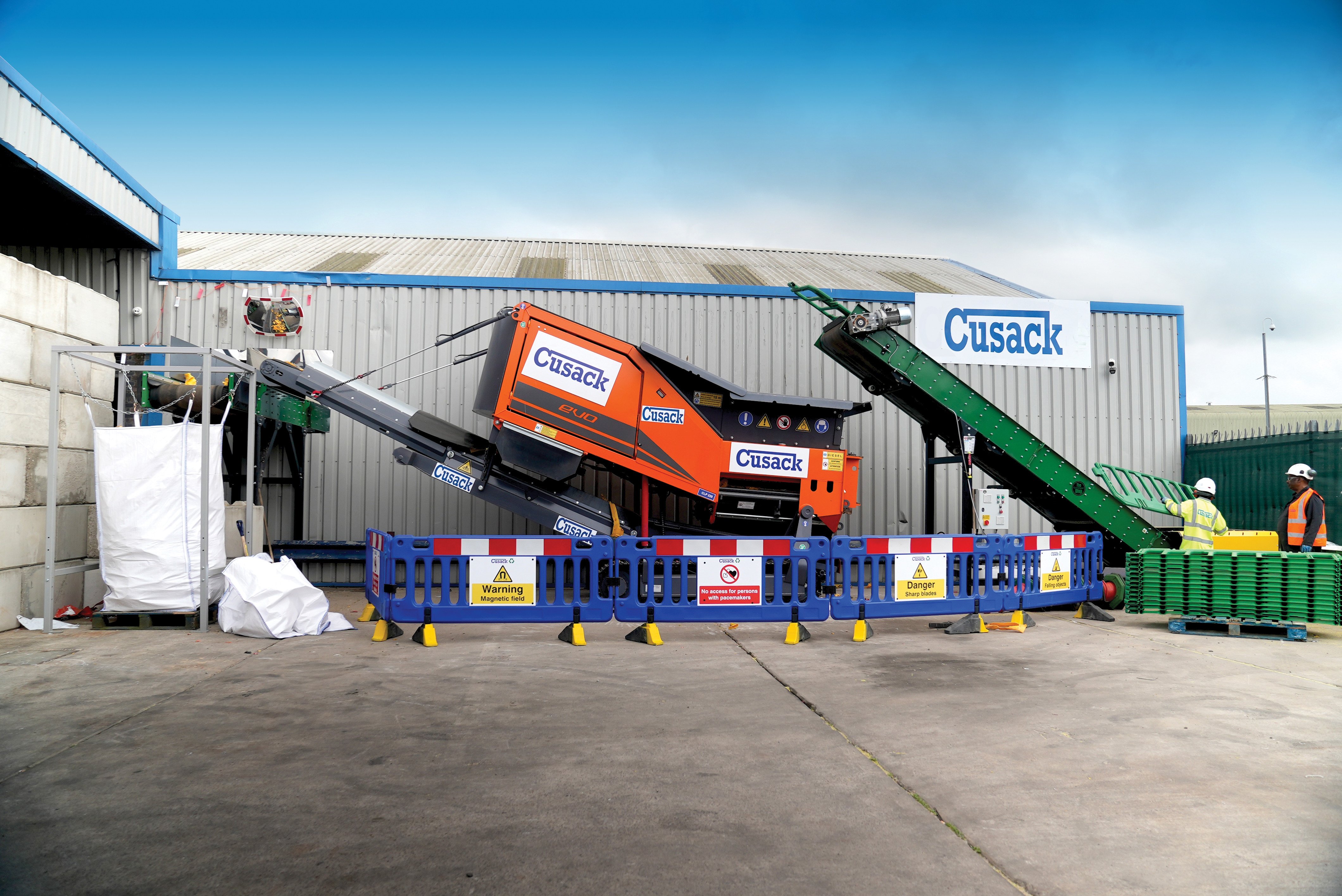
Enfield Recycling Facility
We specialise in transforming end-of-life traffic management products into new, sustainable goods within the same sector. All our processing and production takes place within the UK to support the local economy.
By recycling domestically, we ensure compliance with the UK's high environmental and safety standard, preventing exploitation and environmental harm that may occur in countries with less stringent regulations.
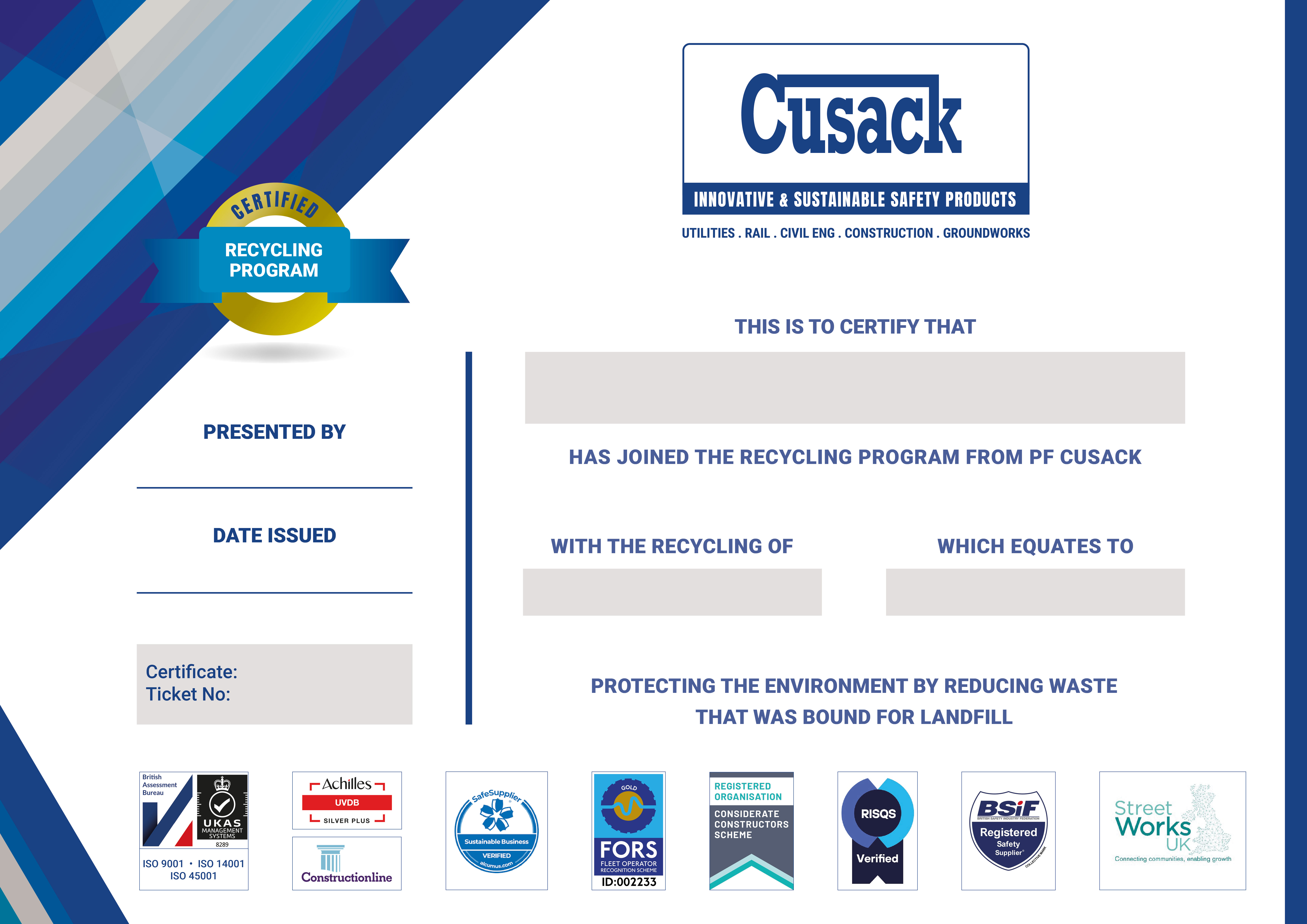
Cusack Recycling Program Certification
Products We Don't Accept
Due to the constraints of our machineries, there are some limitations on the type of products we can accept. These include:
✘ PVC
✘ Fibreglass
✘ Metal items or any products containing metal
✘ Road signs made from Dibond (except ABS and Jazz materials)
✘ Lamps
✘ Cone reflectors
✘ Trench covers
✘ Road bollards
✘ Dynaflex bollards
✘ Titan barriers
✘ Heras Fencing blocks
✘ Quick-lock system (base and post)
Ordering Process
1
Submit your recycling request
Please email a completed End-of-life Road Traffic Management Products form along with images of your palletised products to recycling@cusack.co.uk
Note: Each delivery to our recycling depots is limited to a maximum of 6 pallet spaces. Ensure all pallets are securely stacked and wrapped.Important: Barrier feet and connectors in good condition can be reused. Please consider removing them for reuse before recycling.
Note: Each delivery to our recycling depots is limited to a maximum of 6 pallet spaces. Ensure all pallets are securely stacked and wrapped.Important: Barrier feet and connectors in good condition can be reused. Please consider removing them for reuse before recycling.
2
Place your recycling order
Once your products have been approved, please place an order with us using one of the codes below for traceability purposes. All deliveries to our recycling depots are limited to a maximum of 6 pallet spaces (please note that a double pallet is classed as 2 pallet spaces). We also offer a full load collection service.
To find out prices, drop us an email at recycling@cusack.co.uk
RECY21 - Mixed Single Pallet of Traffic Management Recycling
RECY23 - Mixed Double Pallet of Traffic Management Recycling
RECY25 - Artic Load of Recycling - 24 Pallets
To find out prices, drop us an email at recycling@cusack.co.uk
RECY21 - Mixed Single Pallet of Traffic Management Recycling
RECY23 - Mixed Double Pallet of Traffic Management Recycling
RECY25 - Artic Load of Recycling - 24 Pallets
3
Schedule your drop-off
Once we have received your order, we will contact you to schedule a drop-off day, either in the AM or PM, for returning your products to our recycling depots. Please note that only pre-arranged deliveries will be accepted.
4
Receive your recycling certificate
Once the load has been successfully received at our recycling facilities, you will receive a certificate confirming where the type of road furniture originates, the quantity, the total weight of the material recycled, and the CO2 saving for that load. Please note this could take 10-14 days.
PPE Recycling Service
We have partnered with a leading certified 'Zero to Landfill' provider and can now offer a service for the collection and disposal of unwanted PPE and clothing. This will all help with zero to landfill and produce reusable energy.
Items That Can Be Recycled
Recycling Type A
Eligible Items: Clothing and Gloves
Eligible Items: Clothing and Gloves
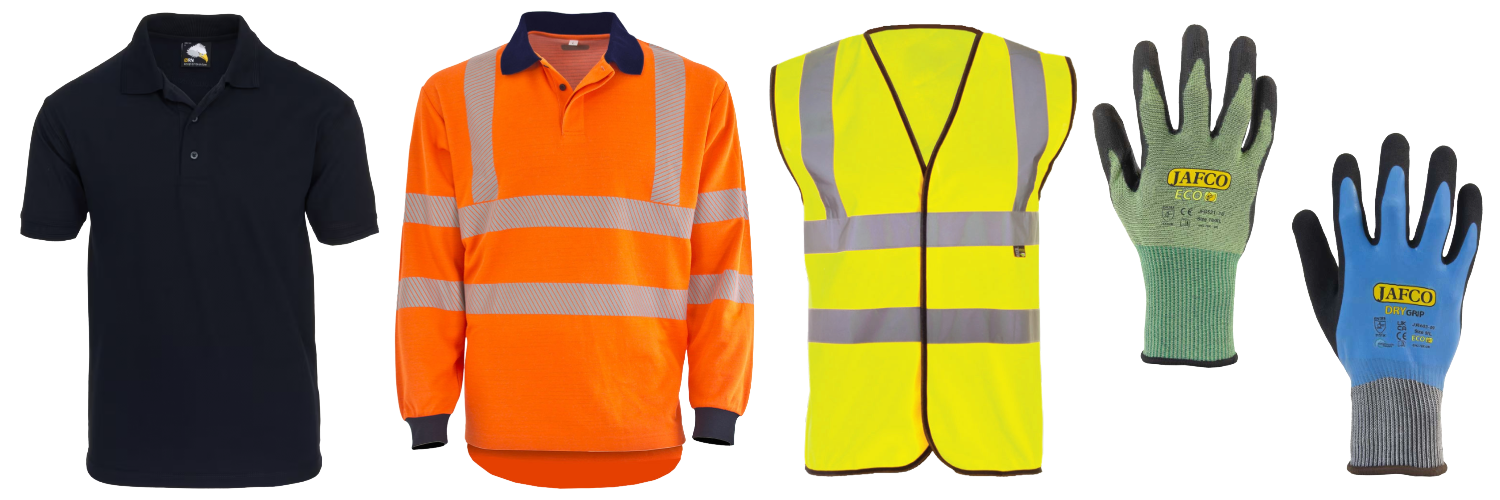
Recycling Type B
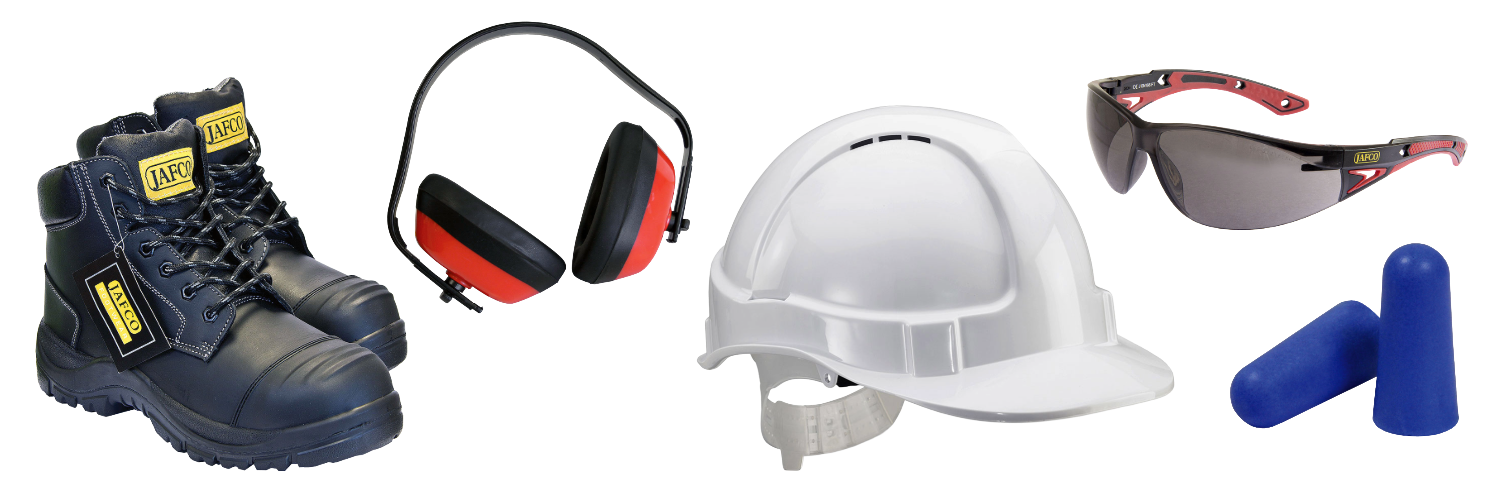
Eligible Items: Footwear, Ear Defenders, Ear Plugs, Safety Glasses and Helmets
Eligible Items: Footwear, Ear Defenders, Ear Plugs, Safety Glasses and Helmets
What Are The Benefits?
Improved Carbon Footprint
By recycling your end-of-life PPE rather than discarding it, you actively reduce the carbon emissions associated with manufacturing new materials, helping your business lower its overall environmental impact.
Better Waste Management
Rather than treating used PPE as general waste, our recycling programme gives your business a structured, trackable process for disposing of protective equipment responsibly and efficiently.
Protects Your Brand
Consumers and clients increasingly expect businesses to act sustainably. Demonstrating a commitment to responsible PPE disposal sends a strong message about your values and helps safeguard your reputation.
Reduces Landfill Costs
PPE is notoriously difficult to recycle through standard waste streams, meaning it often ends up in landfill at a cost. Diverting it through our programme can reduce your overall waste disposal spend.
Helps Reach Sustainability Goals
Whether you're working towards internal targets or industry-wide sustainability commitments, recycling your PPE contributes directly to measurable progress and gives you the certified data to prove it.
Ordering Process
1
Choose your collection method
Select the most appropriate container based on your volume and waste type. Two options are available:
Sacks
Raise a requisition for bags and cable ties before beginning collection:
| Code | Description | Pack Size | Price |
|---|---|---|---|
| B15733 | Large Clear Refuse Bag (22 x 33 x 47 inch) | 100 | £16.50 |
| 150237 | Cable Ties (370mm x 4.8mm) | 100 | £4.04 |
Wheelie bins
120L and 240L bins are available and can be rented or purchased. Scheduled collections require a minimum frequency of every 8 weeks; ad hoc collections can also be arranged.
2
Prepare your waste for collection
Sacks
Place all general workwear / hi-vis clothing (including gloves) and PPE into separate refuse bags and secure each with a cable tie. Keep clothing and PPE in separate bags. Mixed bags (clothing and PPE combined) may affect pricing at collection. Wheelie bins
No bagging is required. Place waste directly into the bin — the driver will empty it and leave it ready for future collections. 3
Raise a collection requisition
Once ready, raise a requisition using the appropriate code for your container size and waste type. For sack collections, a minimum of 10 bags is required before requesting collection.
Sacks
| Code | Description | Price |
|---|---|---|
| RECY01 | Bag A - Recycling Service (Clothing / Gloves) | £19.00 |
| RECY06 | Bag B - Recycling Service (Footwear / Helmets / Ear Defenders / Eyewear) | £37.00 |
Wheelie Bins
| Code | Description | Price |
|---|---|---|
| RECY07A | 120L Bin – Recycling Service (Clothing / Gloves) | £120.00 |
| RECY07B | 120L Bin – Recycling Service (Footwear / Helmets / Ear Defenders / Eyewear) | £215.00 |
| RECY08A | 240L Bin – Recycling Service (Clothing / Gloves) | £215.00 |
| RECY08B | 240L Bin – Recycling Service (Footwear / Helmets / Ear Defenders / Eyewear) | £420.00 |
4
Collection and secure transport
Once the Purchase Order is received, collection will be arranged. All waste is transported in secure, tracked vehicles to the depot for processing.
5
Shredding and recycling
All materials are shredded at a local depot in accordance with BS EN 15713, with operatives vetted to BS 7858. Shredded materials are recycled into new textile products or processed via the energy-from-waste route to generate reusable energy (depending on EWC classification), ensuring that all waste is diverted from landfill. A certificate of destruction will be issued on completion.
Battery Recycling Scheme
Why Recycle Batteries?
Prevent Pollution
Batteries contain hazardous materials like lead, mercury, cadmium, and lithium. If disposed of improperly, these toxic substances can leach into the soil and water, causing significant environmental damage. Over time, these chemicals can contaminate ecosystems, harm wildlife, and even make their way into drinking water sources, posing health risks to humans and animals alike.
Reduce Greenhouse Gas Emissions
By recycling batteries, the energy required to produce new batteries from raw materials is reduced, which in turn lowers greenhouse gas emissions.
Meet Environmental Standards
Proper battery disposal is often mandated by environmental laws and regulations. Recycling ensures compliance with these regulations, helping businesses avoid fines and legal issues while also supporting broader environmental protection efforts.
Avoid Health Risks
Improper disposal of batteries can lead to the release of harmful chemicals into the air and water, which can pose serious health risks to humans. For example, mercury and lead exposure can cause neurological and developmental problems, particularly in children.
How It Works
1
Receive a Recycling Form
We send a recycling form to you to complete.
2
Complete & Return the Form
Fill out the form with the necessary details and send it back to us. We require the following information:
Simply fill out the form with the necessary details and send it back to us.
Information We Require:
Company Name
Contact Person
Contact Number
Full Address (including postcode)
Site Open Times
Forklift on Site Willing to Load/Unload (Yes/No):
Any Vehicle Restrictions? (Yes/No)
Simply fill out the form with the necessary details and send it back to us.
Information We Require:
Company Name
Contact Person
Contact Number
Full Address (including postcode)
Site Open Times
Forklift on Site Willing to Load/Unload (Yes/No):
Any Vehicle Restrictions? (Yes/No)
3
We Take Care of the Rest
Once we receive your completed form, we coordinate with our trusted recycling suppliers to collect your batteries for safe disposal.